

Knee Walker for Non-Weight-Bearing Lower-Leg Recovery
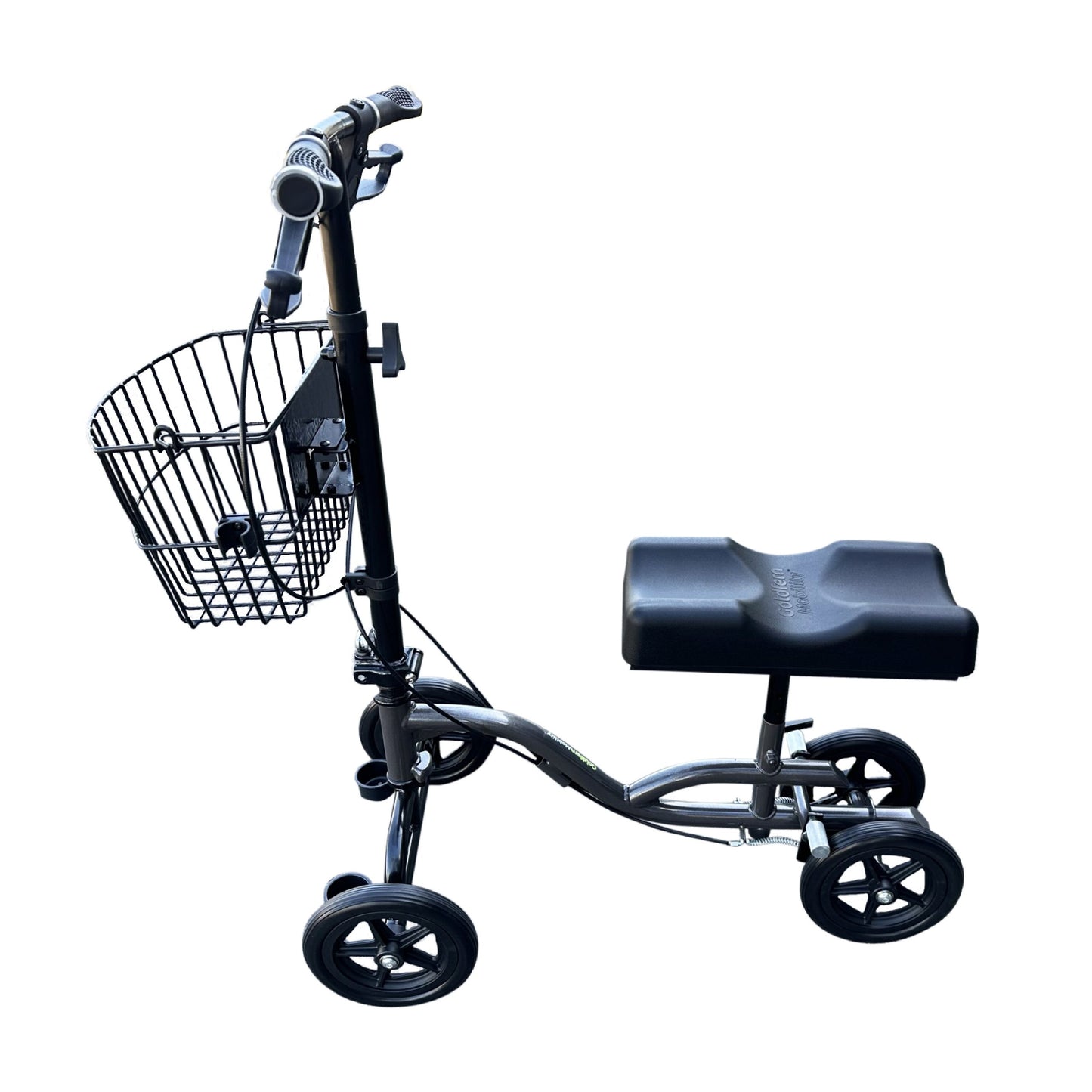
The Goldfern Standard Knee Scooter / Knee Walker provides wheeled mobility for appropriate users who need to keep weight off one lower leg during recovery from an injury or procedure. The affected leg rests on a padded knee platform while the other leg is used to propel the walker.
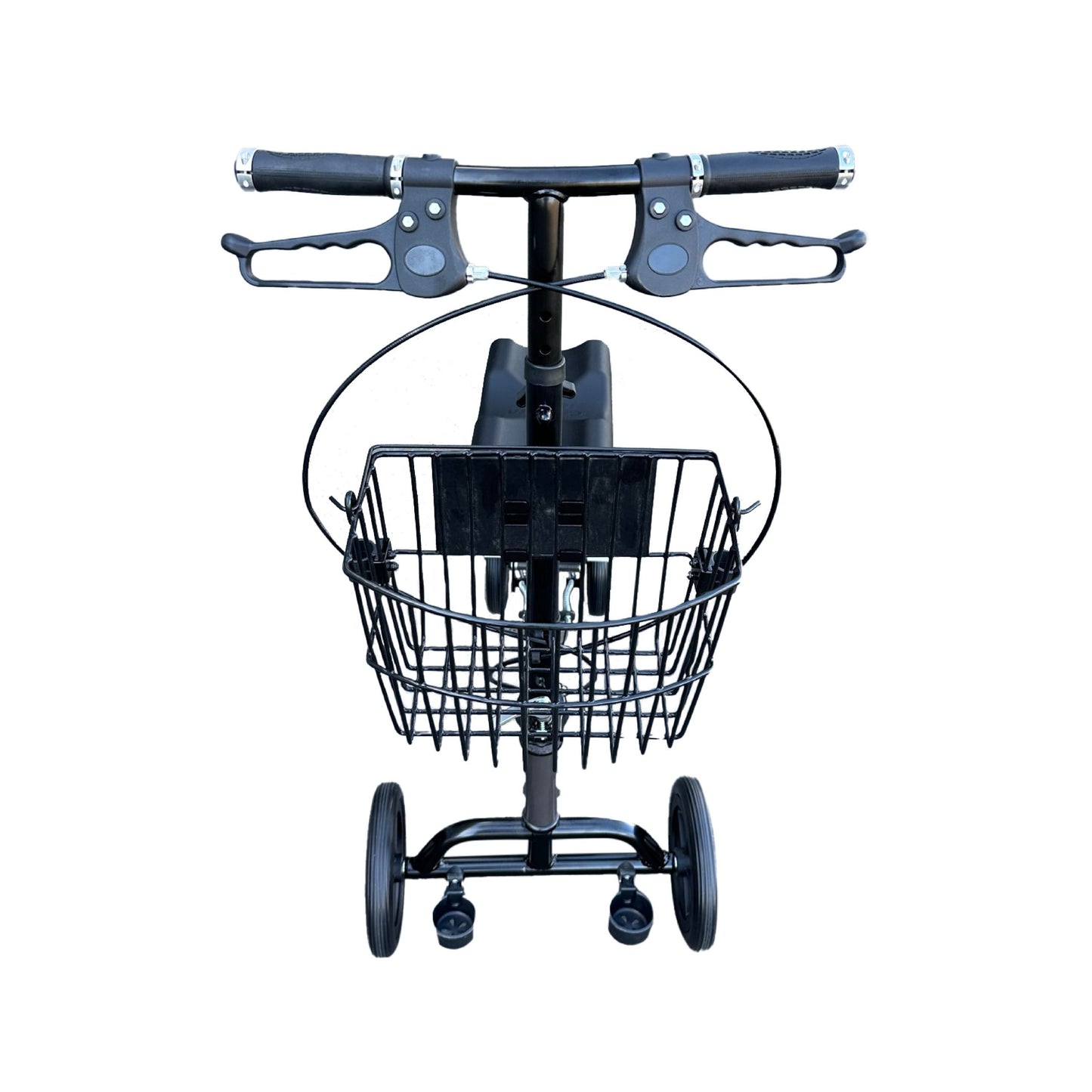
Both the handlebar and knee-pad heights are adjustable, and locking hand brakes provide speed control and parking. A front basket and two cane holders add practical storage for everyday use. Suitability for a knee walker should be confirmed with the health professional managing your recovery.
Standard or Heavy-Duty Knee Walker?
Choose the Standard Knee Walker when its 159 kg capacity and adjustment range suit the user and you prefer the slightly lighter model. Choose the Goldfern Heavy-Duty Knee Walker when the higher 180 kg user capacity or its different adjustment range is required.
Key Features
- Padded knee platform.
- Adjustable knee-pad height from 40 to 54.5 cm.
- Adjustable handle height from 84 to 104 cm.
- Locking hand brakes.
- Front storage basket.
- Two cane holders.
- Maximum user weight of 159 kg.
- Tested to ISO 11199-2.
Why Choose the Goldfern Standard Knee Walker?
For suitable users, a knee walker can provide an alternative way to move around while keeping an affected lower leg non-weight-bearing. Goldfern combines adjustable fit, braking and useful storage in a robust 11.2 kg platform. It is not appropriate for every injury or every user, so follow clinical advice regarding mobility aids during recovery.
Getting the Walking Setup Right
Knee Walker - Standard will feel most natural when the handle position allows an upright posture with relaxed shoulders and a slight bend at the elbows. The user should be able to reach the brakes or handgrips without leaning forward. Wheel size and frame layout also matter: compact designs suit tighter indoor spaces, while larger wheels can feel more settled over uneven outdoor paths.
Before relying on the aid away from home, practice turning, stopping, sitting and folding it in a clear area. If a seat is provided, park the brakes before sitting and use the back support as intended. Check that the folded dimensions and product weight are manageable for the person who will lift it into a vehicle or move it into storage.
Frequently Asked Questions
What type of recovery is a knee walker intended for?
It is intended for appropriate users who need to avoid weight-bearing through one lower leg. Whether it suits a particular injury, surgery or rehabilitation plan should be confirmed with a health professional.
How do you move a knee walker?
The affected lower leg rests on the padded knee platform while the other foot remains on the ground and propels the walker.
What is the maximum user weight?
The Standard Knee Walker is rated to a maximum user weight of 159 kg.
How does it differ from the Heavy-Duty Knee Walker?
The Heavy-Duty model supports up to 180 kg and has slightly different dimensions and adjustment ranges. The Standard model supports up to 159 kg and is slightly lighter.
Can the knee platform height be adjusted?
Yes. The listed knee-pad height range is 40 to 54.5 cm.
Can the handlebars be adjusted?
Yes. Handle height adjusts from 84 to 104 cm.
Does it have brakes?
Yes. It has hand-operated brakes with a locking function for parking.
Does it include storage?
Yes. A front basket is included for carrying small everyday items.
Does it have cane holders?
Yes. The Standard Knee Walker includes two cane holders.
What are its overall dimensions?
The listed overall length is 78.5 cm and total width is 48 cm.
Is a manual available?
Yes. The existing Goldfern Standard and Heavy Duty Knee Walker manual remains linked below.
| Maximum user weight | 159 kg |
|---|---|
| Adjustable knee-pad height | 40–54.5 cm |
| Adjustable handle height | 84–104 cm |
| Overall length | 78.5 cm |
| Total width | 48 cm |
| Product weight | 11.2 kg |
| Testing | ISO 11199-2 |